← All projects 20 October 2026 Energy · Mechanical & electrical design
A 45 ft battery storage container for an AI centre
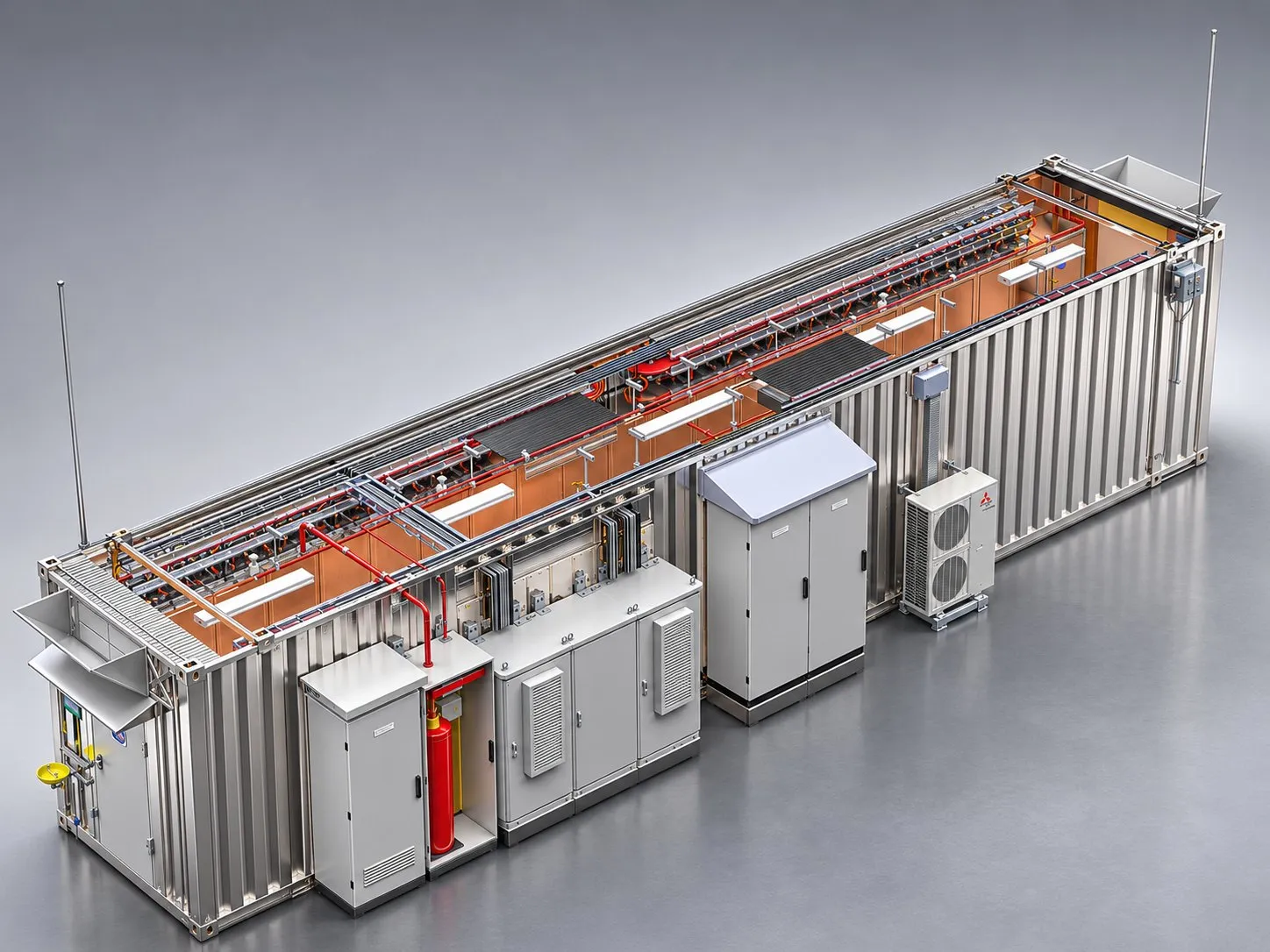
AI centres draw a lot of power, all the time. Battery storage on site gives them a buffer to ride through grid events, smooth peaks and keep critical loads supplied. This project is a 45 ft containerised battery storage system for an AI centre, for a Japanese energy and electrical group.
Coordination is the hard part
A storage container packs batteries, power conversion, cooling, control and protection into a steel box with very little spare room. Each system on its own is well understood. The problems sit between them: a cable tray that hits an HVAC duct, a harness a metre short at the last panel, a bill of materials that no longer matches the drawing after the third revision. These usually turn up on site, where they cost the most to fix.
One model, five systems
We built the design as one coordinated model instead of separate drawings for each discipline. The 44 battery panels sit in two rows along the container, with the main control panels, power terminations and cooling equipment around them. All five systems are in the same model, so a change in one shows up straight away in the others.
176 cables, routed and clash-checked
Every cable is routed in the model, from the control harnesses that run from each row of panels back to its main control panel to the DC power circuit from every panel to the power terminations, and checked for clashes with the structure and the other systems. Because the routes are real, so are the lengths: the cable schedule comes straight out of the model with modelled length, cut length including a termination allowance, and weight, ready to order and build.
Drawings and BOM from the model
The drawing set and bill of materials are generated from the same model rather than kept up to date beside it. When the design changes, the documents change with it, and the build team, the buyer and the commissioning engineer all work from one consistent set.
A one-minute design walkthrough and an interactive cable-schedule tool are on the Ingendia demo platform. The cable schedule there is a demonstration copy: names, part numbers and lengths are illustrative and do not describe the client project.
Next project
Finding mould hot spots and redesigning the cooling channels