← All projects 29 June 2026 Industrial equipment · Maintenance engineering
Cutting outage time on large pump instrumentation
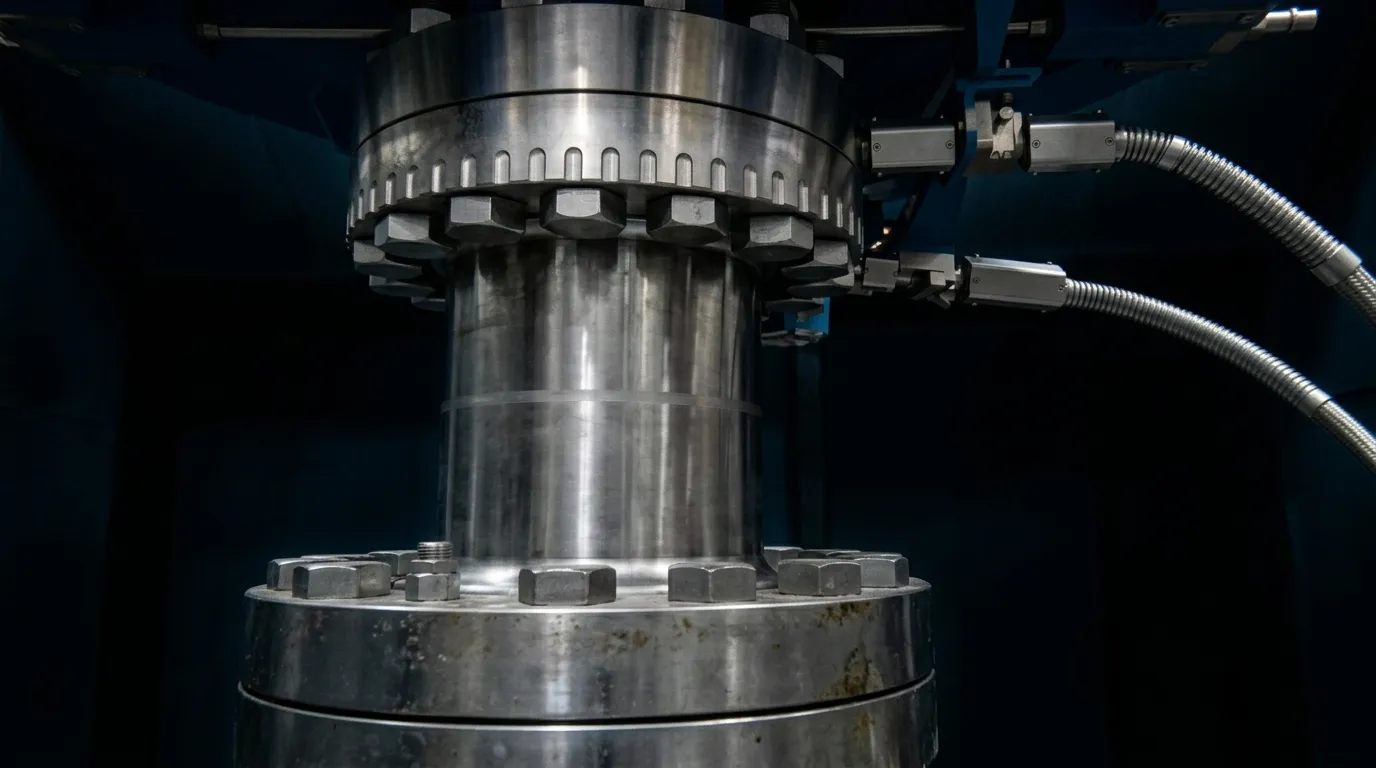
Every plant outage, the monitoring instrumentation on the large primary pumps — shaft displacement probes, variable-reluctance speed sensors, seal-water temperature detectors and all their cabling — has to be removed, protected and reinstalled. The work is slow, it happens in confined spaces around a machine being worked on by other trades, and probes and cables get damaged in the process. This programme develops two complete solutions in parallel, two sets of each, every set covering the three main pumps of one unit.
Route A — don’t remove it at all
The first route accepts the instrumentation where it is and protects it in place: six instrument positions per pump, eighteen per unit.
- Custom rigid and semi-rigid shells over a flexible cushioning wrap, with cable restraint, connector sealing and anti-drop and foreign-object retention built in.
- Materials rated for continuous 80 °C service, with fire performance and cleanliness requirements met and the assemblies designed to be reused outage after outage.
- A modular build in which any single module can be replaced in five minutes or less.
- Small enough not to obstruct work in the pump bay — verified by 3D scanning, interference simulation and 1:1 fit checks rather than by hope.
- Impact validation: multi-angle mallet strikes must not damage the equipment inside.
- High-visibility and audible warning features, so a passing trade knows the protection is there before they knock it.
Route B — make removal fast and repeatable
The second route assumes the probes do come out, and attacks the time and the damage instead. Mounting is assessed at two levels: keep the existing bracketry and standardise the shims, bolts, nut tooling and gap-measurement aids around it, or develop an adjustable mounting with quick location and quick clamping. Either way, the displacement probe to shaft gap must land at 2 ± 0.05 mm.
- A purpose-built tool set: probe nut tools, centring and locating fixtures, gap measurement and verification tools, limit fixtures, torque control, and short-handle and offset spanners for the positions a normal tool cannot reach.
- Connector caps, moisture seals, temporary lashings and tool lanyards — the small things that decide whether a probe survives the trip out and back.
- Storage and handling: shock-proof, scratch-proof, compartmented, labelled and moisture-sealed cases for 24 probes and sensors, plus a dedicated case for speed probes, machined from solid inserts at prototype stage and mouldable for the final build.
- Cable management that protects connectors and pins in transit, with a target of three minutes or less to fit or remove per cable.
- Foreign-object exclusion caps that install and remove in under three minutes per pump, and accounting aids so nothing is left behind.
Built for the environment it lives in
Everything is designed for 0–80 °C, 100% relative humidity with condensation, 86–110 kPa, and an atmosphere carrying dust, oil mist, mildly corrosive gases, light vibration and electromagnetic interference. Because the same instrument type is mounted differently from site to site, the designs are required to adapt — adjustable, replaceable or purpose-configured variants rather than one rigid part number.
An 18-month programme
Design submission at month two, factory acceptance testing at thirteen, delivery at fourteen, installation and commissioning complete at seventeen and project completion at eighteen. Each route ships with its technical dossier, test plan, user documentation, test data and anomaly records, test report and completion certificate — plus three years of maintenance, software updates and remote support, and at least four hours of on-site operation and maintenance training.
Next project
From working prototype to pilot production: a companion robot’s second revision