← All projects 1 April 2026 Product engineering · Diagnostics
From bench biosensor to roadside kit: industrialising an oral-fluid drug screening system
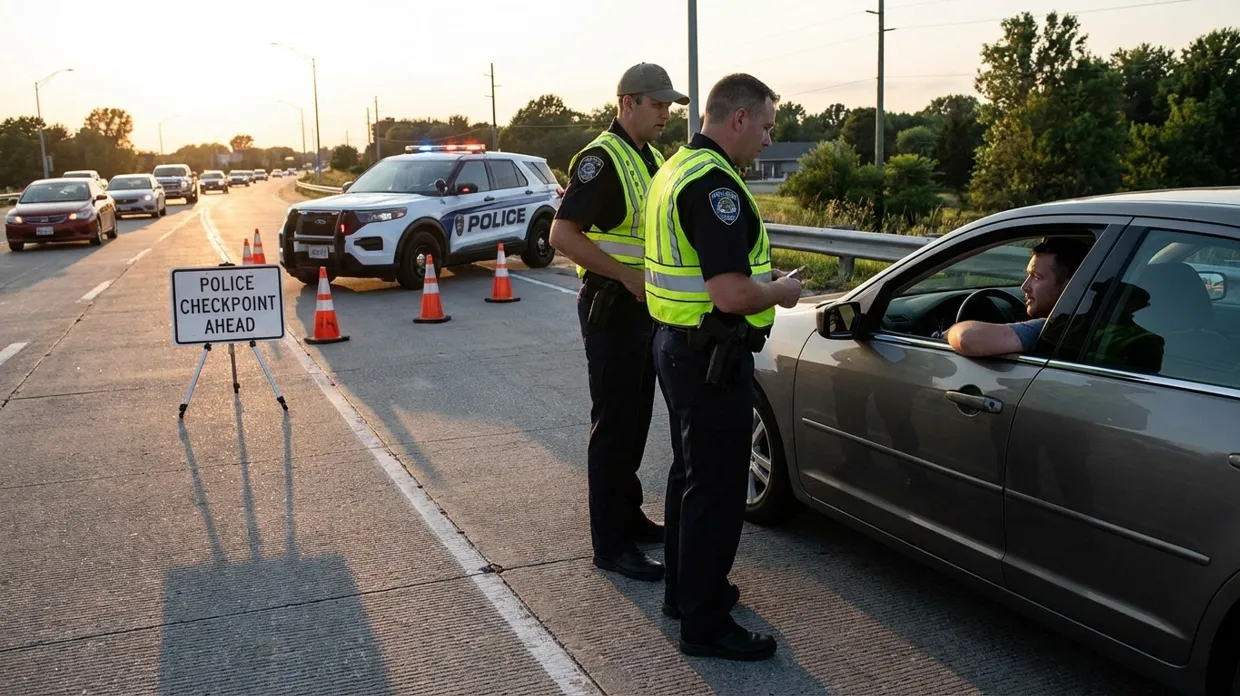
A biosensor that performs on a laboratory bench is not yet a device a police officer can use at the roadside. The roadside adds gloves, rain, glare and darkness, time pressure, hygiene constraints, and an evidential workflow that has to hold up later. This programme is the engineering that closes that distance — turning a proven detection concept into two manufacturable instruments, a disposable that can be made by the thousand, and a pilot build that can be put in front of real users.
Two readers, one consumable
The defining architectural decision was to industrialise two quite different readers against a single disposable. One is a compact unit that tethers to a phone over USB-C and borrows its screen. The other is fully standalone — its own battery, its own display and guided workflow, and a cellular radio for upload. They suit different operational models, and rather than choose between them the programme carries both, because a single Universal Swab Cartridge mates with each through a common mechanical and electrical interface.
That constraint is what makes the economics work. One consumable means one set of tooling, one packaging and labelling line, one lot-traceability scheme and one supply chain — regardless of which reader a given force deploys. It also means the interface definition has to be right early, because both instruments and the disposable are being designed against it in parallel.
- Phone-tethered reader — signal acquisition front end, ADC and microcontroller; a USB-C interface and protocol defined against the phone application; power drawn from the handset or an internal cell; a rugged, wipeable, drop-tolerant handheld enclosure with a tamper-resistant cartridge slot.
- Standalone reader — battery, charging and protection with an optional vehicle dock; a cellular module with SIM or eSIM, and the antenna and RF constraints that come with putting a radio inside a sealed handheld; an on-device guided workflow with unambiguous result and error states; local logging of timestamp, device identifier and result.
- Shared across both — measurement sequence control, power-on self-test, calibration status indication and error recovery in firmware, so an officer is told plainly when the instrument is not fit to give a result.
Keeping the wet path away from the contacts
The disposable is the harder half of the problem. Saliva has to be collected, metered to a fixed volume, conditioned, and delivered to the reaction region — while the electrical contact pads the reader relies on stay completely dry. The cartridge is built around that separation: a sealed wet path with a clean zone held apart from the contact interface, a controlled actuation and venting scheme, an air trap and hydrophobic vent membrane to manage bubbles, and an isolated indicator path that tells the user whether the sample was actually adequate before anything else happens.
Around the fluidics sits a set of constraints that are purely about the human holding it. The form factor has to be handled in gloves. Insertion has to be error-proof — there should be no wrong way to seat it. The outside has to be wipeable, and the whole thing has to survive a glovebox, a patrol car and a cold morning.
Designed to be made, and to be tested
Manufacturability is treated as design input rather than a later review. The consumable work defines part split, materials and tolerances, the sealing method — snap fit, adhesive or ultrasonic weld — and the assembly sequence that suits both a pilot run and eventual volume. Packaging is specified alongside it: pouch, labelling, lot and expiry coding, and a scannable code for traceability. Inspection points are named rather than assumed — visual, seal integrity, contact-pad integrity, packaging integrity.
Both readers get a design-for-test package to match: an end-of-line test specification, the fixtures to execute it, and for the standalone unit an RF test approach, because a radio that passes on the bench and fails in a sealed enclosure is a problem best found before the pilot run rather than during it.
The line we do not cross
This is worth stating plainly, because it defines the engagement. Analytical performance — sensitivity, specificity, assay selection and cut-off thresholds — is not ours to claim. That sits with the client’s research team and with the police verification protocol. Our responsibility is engineering integration and testability: making the chemistry usable, repeatable and measurable in a device that can be manufactured, and making sure the instrument can be verified. Regulatory submission preparation sits outside the scope beyond planning and alignment, and while the design is built to support an evidential workflow, chain-of-custody procedure and operational policy remain matters for the agencies that will use it.
Where the programme stands
An earlier stage captured end-user needs under real field conditions and narrowed a field of architecture options down to the two readers now being built. The current stage is industrialisation and pilot build, run to milestones: baseline and interface lock first, then pilot-ready design releases for the cartridge and each reader, then tooling and fixtures, then pilot units into a controlled field evaluation. It closes with a pilot build report — issues, yields, test results — and a production-readiness recommendation covering unit-cost drivers and supply chain. One iteration loop on pilot feedback is planned into the schedule rather than hoped for, on the assumption that putting hardware in front of real users at the roadside will teach us something we did not design for.
Next project
A robot dog on patrol: one platform doing security rounds and safety inspection